The first family stories are on their way. Send us yours: a recipe, how you celebrate a festival abroad, or a story from your grandparents.
Life moments
Every Ceremony, From Before Birth
The sixteen sanskaras and simple guides for the ceremonies families celebrate most: what each means, its name in your region, how it is done and a checklist.
The Upanishads are the closing part of each Veda, which is why they are also called Vedanta, "the end of the Veda". Where the earlier Vedic texts are mostly hymns and instructions for ritual, the Upanishads turn inward. They ask what a human being really is, what the world rests on, and how the two are connected.
Tradition counts 108 Upanishads, but about a dozen are called the principal ones. Among them are the Isha, Kena, Katha, Prashna, Mundaka, Mandukya, Taittiriya, Aitareya, Chandogya and Brihadaranyaka. Most are written as conversations: a student questions a teacher, a son questions his father, a king questions a sage.
Two ideas run through all of them. Brahman is the one reality behind everything that changes. Atman is the true self in each of us, the awareness that stays the same while body and thoughts change. The great teaching of the Upanishads is that these two are not separate. The Chandogya Upanishad says it in three words, tat tvam asi, "you are that".
The texts also give practical guidance. The Katha Upanishad tells the story of Nachiketa, a boy who meets Yama, the lord of death, and refuses every reward until Yama explains what survives death. Along the way it compares the body to a chariot, the senses to horses and the mind to the reins, a picture that is easy to share with children.
If you are starting out, begin with the Isha Upanishad. It has only eighteen verses and can be read in one sitting. Then read the Katha for its story. Choose a translation that prints the Sanskrit beside the English, read slowly, and stay with one verse a day. The Upanishads were meant to be heard, remembered and thought about, not rushed.
Vedas · 5 min read
The Four Vedas: What They Are and What They Teach
The Vedas are the oldest texts of India and among the oldest in the world. They are called shruti, "what was heard", because tradition holds that the sages received them in deep meditation and passed them on by memory, teacher to student, for thousands of years before they were written down.
There are four Vedas. The Rig Veda is the oldest: just over a thousand hymns in ten books, praising the forces of nature as Agni (fire), Indra, Varuna, Surya and Ushas (the dawn). The Gayatri mantra, chanted daily in many homes, comes from the Rig Veda.
The Sama Veda sets many of those verses to melody. It is the Veda of song, and Indian classical music traces its roots to it. The Yajur Veda holds the prose formulas and instructions recited during ritual, and comes in two branches, the Shukla (white) and Krishna (black). The Atharva Veda is the most down to earth. Its hymns cover health, healing, family life, protection and the home, and Ayurveda draws on it.
Each Veda has four layers. The Samhitas are the hymns themselves. The Brahmanas explain the rituals. The Aranyakas, the "forest books", reflect on their meaning. The Upanishads, at the end, turn to questions about the self and reality.
You don't need to study all of this to begin. Learning to chant one Vedic verse correctly, with its meaning, is a living link to a tradition that has been passed on by voice for longer than almost any other on earth.
Vedic living · 5 min read
Dinacharya: An Ayurvedic Daily Routine for Busy Families
Ayurveda says health is built less by what we do once and more by what we do every day. Its daily routine, dinacharya, follows the rhythm of the sun, and you don't need to adopt it all at once to feel the difference.
Wake a little earlier. The hours before sunrise, called brahma muhurta, are calm and clear. Even waking twenty minutes before the rest of the house gives you time to breathe, sit quietly or simply drink a glass of warm water before the day begins.
Clean the senses. Brush your teeth, scrape your tongue and splash your eyes with cool water. A few drops of warm sesame oil massaged into the feet, scalp or whole body before a bath (abhyanga) is one of the most loved Ayurvedic habits, and children usually enjoy it too.
Move and breathe. Ten minutes of gentle yoga or a few rounds of Surya Namaskara wake the body up. Follow with a minute of slow breathing before you look at a screen.
Eat with the sun. Ayurveda calls digestion agni, the inner fire, and says it is strongest at midday. Make lunch the main meal when you can, keep dinner light and early, and go to bed before eleven. These small shifts, kept up for a few weeks, are where the real change happens.
Rituals · 4 min read
Why We Light a Lamp at Dusk
In many Indian homes, the day turns into evening with one small act: someone lights an oil lamp in front of the family altar. It is often called the sandhya deepa, the lamp of twilight, and every region has its own name and prayer for it.
The lamp stands for knowledge driving away ignorance, the way a single flame pushes back the dark. The ghee or oil is said to be our habits and tendencies, the wick is the ego, and as the lamp burns, both are slowly used up in the service of light.
Families usually say a short prayer as they light it. A common one is "Shubham karoti kalyanam", which wishes health, wealth and goodness for everyone, and asks the light to remove harmful thoughts. Children learn it quickly because it is short and has a lovely rhythm.
If you live in a flat with smoke alarms, you can still keep the habit. A small brass lamp with ghee and a cotton wick gives very little smoke, and you can place it on a tray away from curtains. Some families use a wax diya on weekdays and an oil lamp on festival days.
What matters most is the pause. Lighting the lamp at the same time each evening, together with your children, marks the end of the busy day and the start of family time. It costs two minutes and gives a home its rhythm.
Food · 5 min read
Eating on a Banana Leaf, and Other Food Wisdom
At an Onam sadya or a wedding meal anywhere in South India, food arrives on a fresh banana leaf in a fixed order. Salt, pickle and chutneys go on the top left, vegetables and kosambari along the top, rice in the centre, and sweets on the right. Nothing is placed at random.
The leaf itself has good reasons behind it. It is clean, waterproof and fully compostable. Hot food releases a light, pleasant aroma from the leaf, and its wax coating is said to add to the flavour. After the meal, folding the leaf towards you means you enjoyed the food; folding it away is kept for sad occasions.
The order of the meal follows the six tastes of Ayurveda: sweet, sour, salty, pungent, bitter and astringent. A good meal includes all six, which keeps you satisfied and stops cravings later. That is why even a simple plate has a little pickle, a little sweet and something bitter like a gourd palya.
Eating with the hands is part of the experience. Touching food tells the body a meal is coming, and you notice texture and temperature, so you eat more slowly. Many families also say a short prayer before eating, offering the food before tasting it.
You don't need banana leaves to bring this home. Serve one meal a week in courses, include all six tastes, eat together without screens, and let children try eating with their hands. It turns dinner into a small ritual of thanks.
Food · 5 min read
Ritucharya: Eating With the Seasons
Ayurveda divides the year into six seasons, or ritus, and suggests changing our food and habits as each one arrives. The idea is simple: the weather outside changes the body inside, so the plate should change too.
In winter, digestion is strong and the body needs warmth. This is the time for ghee, sesame, jaggery, root vegetables, soups and warm spices like ginger and black pepper. It is no accident that Sankranti sweets are made of sesame and jaggery.
Spring brings heaviness and colds as the cold melts. Ayurveda suggests lighter food: barley, millets, bitter greens, honey and plenty of ginger. The neem and jaggery eaten at Ugadi is a reminder that a little bitterness helps the body clean itself at this time of year.
Summer heat calls for cooling foods: buttermilk, cucumber, coconut water, sweet fruits and fewer spices. In the monsoon digestion is weak, so meals should be freshly cooked, warm and simple, like rice and dal with cumin and ginger. Autumn, after the rains, is the time to calm the body's heat with sweet, bitter and cooling foods.
For families abroad the seasons may look different from India's, but the principle travels. Watch the weather where you live, eat what grows locally in that season, and keep your meals warm when it is cold and light when it is hot.
Rituals · 5 min read
What Is Sandhyavandana?
Sandhyavandana means "worship at the junctions". It is a daily prayer performed at sunrise, noon and sunset, the three moments when one part of the day turns into the next. It is traditionally done by those who have received the sacred thread at upanayana.
The practice has a clear structure. It begins with achamana, sipping water three times while chanting names of Vishnu, to purify oneself. Pranayama, controlled breathing, follows to calm the mind. Then comes arghya, offering water to the sun from cupped hands, and finally japa of the Gayatri mantra, usually 10, 28 or 108 times.
The Gayatri mantra, from the Rig Veda, is a prayer for a clear and bright mind. Its meaning, in short, is: "We meditate on the radiant light of the divine sun; may it inspire our understanding." Chanting it at sunrise sets the tone for the whole day.
Many people learned Sandhyavandana as children and let it slip. It is never too late to restart. Begin with the morning practice only, which takes about fifteen minutes once you know it, and learn the meaning of each step so it doesn't become a mechanical routine.
Even those who don't perform the full ritual can borrow its spirit: pause at sunrise and sunset, take a few slow breaths, and turn your attention to the light. That is the heart of it.
Philosophy · 6 min read
Five Great Questions from the Vedic Tradition
The Vedic tradition is often remembered for its rituals, but at its heart are questions. The Upanishads are full of students asking teachers what life is really about. Here are five of the greatest questions they ask.
Who am I? The Upanishads answer that you are not only your body, your job or even your thoughts. You are the awareness that notices all of them, the Atman. Ramana Maharshi made this question, "Who am I?", a complete spiritual practice in the twentieth century.
What is real? The world changes all the time, so the sages asked what stays the same beneath it. Their answer is Brahman, the one reality behind all forms. The Chandogya Upanishad compares it to clay, which stays clay whether it becomes a pot or a cup.
What happens after death? In the Katha Upanishad the boy Nachiketa asks Yama, the god of death, exactly this. He turns down wealth and long life until he gets an answer: the true self is never born and never dies.
How should I live? The Taittiriya Upanishad gives a graduating student simple advice: speak the truth, follow dharma, never stop learning, and treat your mother, father, teacher and guest as divine.
What brings lasting happiness? The answer here is gentle but firm: not more things, but knowing the self. The Isha Upanishad says to enjoy the world without grasping at it. These questions are not meant to be answered once. They are meant to be lived with, and asked again at every stage of life.
Vedic living · 5 min read
Vedic Knowledge in Modern Life
It is easy to think of the Vedas as something for temples and priests. But much of what they teach is practical, and fits surprisingly well into busy modern lives in Bengaluru, Berlin or Boston.
Start with rhythm. Vedic life followed the sun: waking early, eating the main meal at midday, praying at dusk. Sleep scientists today say much the same thing about body clocks. Keeping regular times for sleep and meals is one of the easiest Vedic habits to borrow.
Then there is the idea of dharma, doing what is right for your role and stage of life. For a parent it might mean being present at dinner. For a student, studying honestly. It turns big moral questions into daily choices.
The tradition also teaches attention. Chanting, japa and meditation train the mind to stay with one thing. In a world of notifications, even five minutes of mantra or quiet breathing a day can make a real difference to stress and focus.
Finally, the Vedas teach gratitude: to the sun, the rivers, the earth, teachers and ancestors. Saying a prayer before a meal, lighting a lamp at dusk or thanking elders on festival days keeps that gratitude alive. None of this needs a big change of lifestyle. It needs small, steady practices, started today.
Books for kids · 4 min read
The Best Indian Books for Children
Children who grow up far from India often know Indian food better than Indian stories. Books are the easiest way to change that. Here are some we love, most of them easy to order abroad.
Amar Chitra Katha comics have introduced generations of children to the Ramayana, the Mahabharata and Indian history. The illustrations are bold and the stories short, which makes them perfect for reluctant readers aged 7 and up.
For younger children, the Panchatantra and Jataka tales are ideal: animals, clever tricks and a clear moral at the end. Many editions are available, and our own Stories for Little Minds page has free versions to read aloud.
Sudha Murty's books, such as Grandma's Bag of Stories, are warm, funny and full of Indian family life. They are a wonderful bridge for children who know the language of grandparents but not their world. R.K. Narayan's Swami and Friends is a gentle classic for older readers.
Pratham Books publishes beautiful picture books in many Indian languages, and its StoryWeaver website offers thousands of them free to read online, often in English and your mother tongue side by side. Tulika Books and Karadi Tales also make lovely books and audio stories for little ones.
The best tip is the simplest: read together. Ten minutes of an Indian story at bedtime, with your own memories added in, does more than any app.
Festivals · 4 min read
Keeping Festivals Alive Far From Home
For many families abroad, festivals fall on a busy school or work day, with no holiday and no neighbours celebrating. It is easy to let them pass with just a phone call home. A little planning keeps them alive.
Know the dates early. Indian festivals follow the lunar calendar, so they move every year. Put the year's main festivals into your family calendar in January, and plan a weekend celebration close to each one if the day itself is busy.
Give children a job. Children remember what they do, not what they are told. Let them draw the rangoli or kolam, make the til-gul or ellu bella, string the mango leaves or arrange the golu dolls. Our festival companions and printable puja guides are made for exactly this.
Tell the story. Every festival has one: Prahlada and Holika, Ganesha's elephant head, Rama coming home to Ayodhya. A five-minute story before the puja gives the ritual its meaning.
Invite others. Share sweets with neighbours and classmates, or celebrate together with other Indian families. Explaining Diwali to a friend helps children feel proud of it. And keep it simple: one lamp, one sweet and one story, done with joy, is a real celebration.
Regions of India · 6 min read
Tamil Nadu: Kanchipuram Silk, Temple Towns and the Banana-Leaf Meal
Tamil Nadu holds some of the oldest living traditions in India. Its temples have been in daily worship for over a thousand years, its language has an unbroken literature of more than two thousand, and its kitchens still follow recipes passed down by grandmothers.
Textile: Kanchipuram silk. In the temple town of Kanchipuram, weavers make heavy mulberry silk sarees with wide contrasting borders and a pallu woven separately and joined so finely that the seam is almost invisible. The borders carry temple patterns: gopurams, peacocks, mango buds and the checks called kattam. A real Kanchipuram saree uses silk thread twisted with real silver and gold zari, and a single bridal saree can take a weaver two weeks or more. Look for the Geographical Indication tag and buy from a weavers' cooperative if you can.
Places: the temple towns. Madurai is built around the Meenakshi Amman Temple, whose painted towers are covered with thousands of figures. Thanjavur's Brihadeeswarar Temple, built by Raja Raja Chola around 1010, is a UNESCO World Heritage Site. Mahabalipuram, by the sea, has rock-cut temples and the great carving of Arjuna's Penance. Visit in January to see every doorstep drawn with kolam for Pongal.
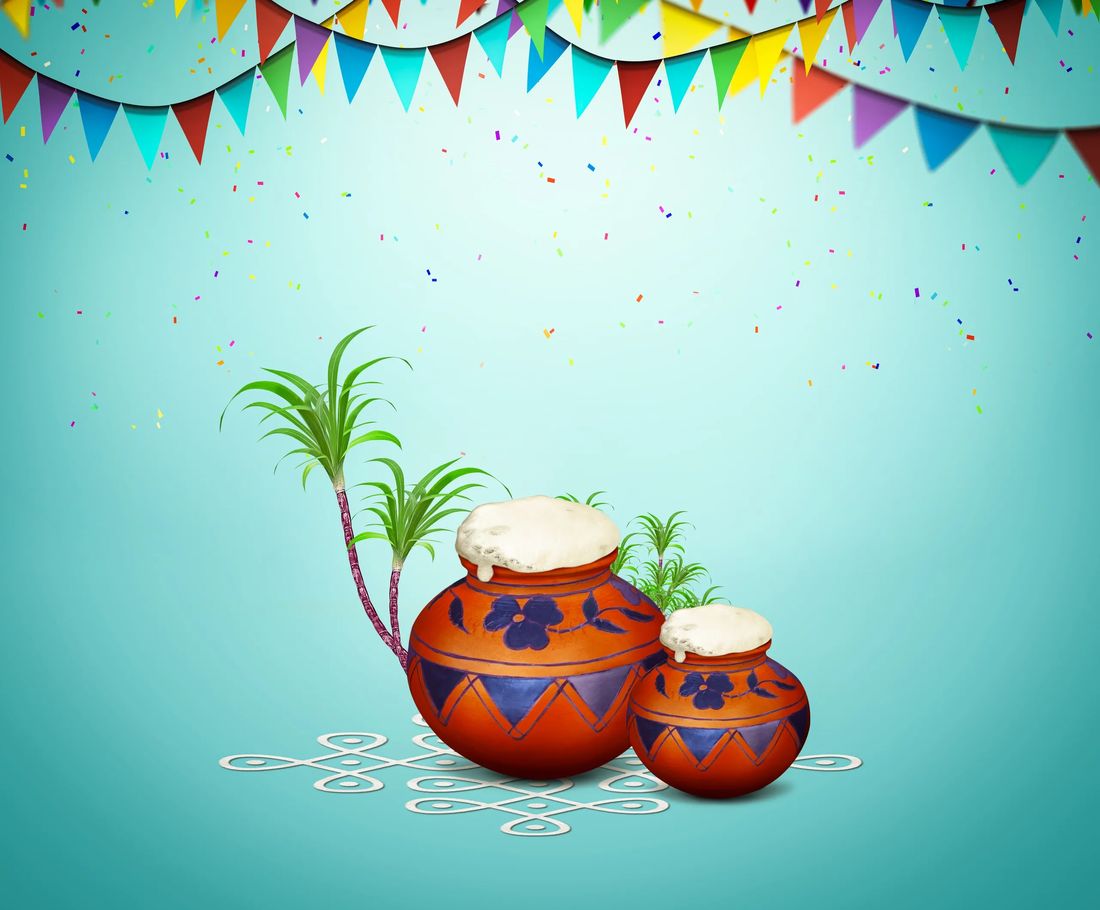
Pongal, the harvest dish boiled until it overflows
Food: a Tamil meal on a banana leaf moves through sambar, rasam and curd rice, with poriyal, kootu, appalam and payasam. Breakfast is idli, dosa or ven pongal with coconut chutney, and filter coffee is served in a steel tumbler and davara. Chettinad cooking, from the Karaikudi region, is known for its black pepper, star anise and kalpasi (stone flower).
Crafts to look for: Thanjavur paintings with gold leaf, Thanjavur dancing dolls that sway when touched, bronze icons from Swamimalai, and Pattamadai mats woven from fine korai grass.
At home abroad: make a small kolam at your door with rice flour on a Friday, and cook sakkarai pongal at Pongal with your children.
Karnataka: Mysuru Silk, Channapatna Toys and Bisi Bele Bath
Karnataka runs from the coconut coast of Udupi to the boulder hills of Hampi and the coffee estates of Kodagu. Each corner has its own food, crafts and festivals, and Mysuru ties them together with Dasara.
Textile: Mysore silk and Ilkal. Mysore silk sarees are light, soft and plain-bodied, with a pure gold zari border; the government silk factory in Mysuru has woven them since 1912. In north Karnataka, Ilkal sarees join a cotton body to a silk pallu with a technique called tope teni, and Molakalmuru silk is known for its temple borders.
Places: Mysuru's palace is lit with nearly a hundred thousand bulbs on Sunday evenings and every night of Dasara. Hampi, the capital of the Vijayanagara empire, is a UNESCO site of ruined temples and bazaars along the Tungabhadra. The Hoysala temples at Belur and Halebidu are carved so finely that the stone looks like lace, and Shravanabelagola's Gommateshwara statue is one of the largest monolithic statues in the world.
Mysore painting: fine lines, soft colours and gold leaf
Food: Bengaluru breakfasts are idli-vada, masala dosa and chow chow bath (khara bath with kesari bath). Bisi bele bath, rice and lentils cooked with tamarind and a special spice powder, is the classic Sunday lunch. North Karnataka eats jolada rotti (jowar flatbread) with ennegai, stuffed brinjal, while the coast cooks with coconut and kokum. For festivals there is obbattu, kosambari and Mysore pak, which was first made in the palace kitchen.
Crafts to look for: Channapatna lacquered wooden toys, coloured with natural dyes; Mysore paintings with gold leaf; Bidriware from Bidar, black metal inlaid with silver; sandalwood carving and Mysore sandal soap.
At home abroad: set up a small bombe habba at Navaratri with a wooden doll pair, and share ellu bella with friends at Sankranti.
Regions of India · 6 min read
Kerala: Kasavu, Backwaters and the Onam Sadya
Kerala is a narrow green strip between the Western Ghats and the Arabian Sea, full of rivers, lagoons and spice gardens. Its culture is shaped by the monsoon, the temples and the sea trade that brought pepper and cardamom to the world.
Textile: the kasavu. The Kerala saree, and the mundu worn by men, is off-white handloom cotton with a gold border called kasavu. The best known weaving centres are Balaramapuram near Thiruvananthapuram, and Kuthampully and Chendamangalam. It is worn at Onam and Vishu, at weddings and at temple visits, and its simplicity is the point: the cloth itself is the decoration.
Places: the backwaters around Alappuzha and Kumarakom are best seen from a houseboat or a small canoe. Kochi mixes Chinese fishing nets, the Mattancherry spice market and a 16th-century synagogue. Guruvayur's Krishna temple is one of the most visited in South India, and Thrissur Pooram, in April or May, brings out caparisoned elephants and an hour-long percussion concert.
Arts: Kathakali dancers spend hours on their green make-up before a performance, and Mohiniyattam, Theyyam and the snake-boat races at Onam are all worth planning a trip around.
Food: the Onam sadya is served on a banana leaf with rice, parippu (dal) with ghee, sambar, rasam, avial, thoran, olan, kaalan, pachadi, pickles, banana chips, sharkara varatti and two or three kinds of payasam. Everyday Kerala food uses coconut oil, curry leaves and fresh coconut: puttu and kadala curry, appam and stew, and fish curry with kudampuli on the coast.
Crafts to look for: Aranmula kannadi, a metal mirror polished from a secret alloy; coir and screwpine mats; Kathakali masks; and brass lamps (nilavilakku) for the puja room.
At home abroad: draw a pookalam with flowers from your garden on Thiruvonam, and cook one sadya dish, such as avial, using vegetables from your local market.
Regions of India · 6 min read
Andhra Pradesh and Telangana: Ikat, Kondapalli Toys and Fiery Food
The two Telugu states share a language, a love of chilli and a long weaving tradition, from the coastal Godavari delta to the Deccan plateau around Hyderabad.
Textile: ikat and Kalamkari. In Pochampally, in Telangana, the threads are tied and dyed before weaving, so the pattern appears as the cloth is woven, with the soft, slightly blurred edges that give ikat its charm. Venkatagiri and Uppada are known for fine cotton and silk sarees with jamdani-style motifs, and Gadwal sarees join a cotton body to a silk border. Kalamkari from Srikalahasti is drawn by hand with a bamboo pen and natural dyes, often telling stories from the Ramayana and the Mahabharata; the Machilipatnam style is block-printed.
Places: Hyderabad's Charminar and Golconda Fort, the Ramappa Temple near Warangal (a UNESCO site built in the 13th century), the hill shrine of Tirumala, and the river temples along the Godavari and the Krishna. Basar, on the Godavari, is a Saraswati temple where many families hold Aksharabhyasam.
Food: Andhra food is famous for its heat: gongura pachadi made from sour sorrel leaves, avakaya mango pickle, pesarattu (green moong dosa) with upma, and pappu (dal) with a spoon of ghee. Telangana cooks sarva pindi, a crisp rice-flour pancake, and jonna rotte, and Hyderabad adds biryani and haleem. For Ugadi, every home makes ugadi pachadi with neem flowers, jaggery, tamarind and raw mango, and bobbatlu for the festival lunch.
Crafts to look for: Kondapalli toys carved from light tella poniki wood, Etikoppaka lacquered toys, Nirmal paintings, Cheriyal scroll paintings, and Bidri and Karimnagar silver filigree.
At home abroad: keep a jar of avakaya in the fridge, and let children paint a Kalamkari-style story on cloth with fabric pens: one scene from the Ramayana, with a border of flowers.
Maharashtra stretches from the Konkan coast over the Sahyadri hills to the cotton fields of Vidarbha. Its culture is rooted in the bhakti poet-saints, the Maratha forts and the great public festival of Ganeshotsav.
Textile: the Paithani. Paithani sarees are woven in silk and real zari in Yeola and Paithan, with a pallu of peacocks, lotuses and parrots. The colours often change with the light, because the warp and weft are dyed different shades. A Paithani is traditionally part of a Maharashtrian bride's trousseau and handed down for generations. The nine-yard nauvari is worn at weddings, at Gudi Padwa and for lavani dance.
Art: Warli painting, from the tribal communities of the Thane and Palghar districts, uses only white rice paste on a red-earth wall. Circles, triangles and lines become people dancing in a spiral, farmers, trees and animals. It is simple enough for children to try at home.
Places: the Ajanta and Ellora caves near Aurangabad (now Chhatrapati Sambhajinagar), both UNESCO sites, hold Buddhist, Hindu and Jain carvings and paintings made over many centuries. Pune and the forts of Shivaji Maharaj, such as Raigad and Sinhagad, tell the Maratha story. Pandharpur's Vitthal temple is the goal of the Wari, the great walking pilgrimage of the warkaris in June and July.
Food: puran poli, a flatbread stuffed with chana dal and jaggery, is made for Holi and Gudi Padwa, often with katachi amti made from the dal water. Ukadiche modak is steamed for Ganesh Chaturthi. Everyday food is varan-bhaat with ghee and lemon, poha, misal pav, thalipeeth and sabudana khichdi on fasting days, and Kolhapur is known for its fiery tambda and pandhra rassa.
At home abroad: raise a small gudi at your window for Gudi Padwa, share tilgul at Sankranti with the words "tilgul ghya, god god bola", and try a Warli painting on brown paper with white poster paint.
Madhya Pradesh: Chanderi, Maheshwar and Gond Art in the Heart of India
Madhya Pradesh sits at the centre of India, crossed by the Narmada river and covered with forests, plateaus and some of the country's oldest temples and rock art.
Textile: Chanderi and Maheshwari. Chanderi sarees, from the town of the same name, are woven with silk and cotton so fine that the cloth is almost sheer, with small gold motifs called butis: coins, lotuses and peacocks. Maheshwari sarees, from Maheshwar on the Narmada, were encouraged by Queen Ahilyabai Holkar in the 18th century. They are light cotton-silk, often in checks or stripes, with a reversible border, and the weavers' society there still supports local families.
Art: Gond painting comes from the Gond community of eastern Madhya Pradesh. Animals, trees and gods are filled with dots, dashes and fine lines, each artist with a signature pattern. Bhil art uses many-coloured dots. Bhopal's Tribal Museum is one of the best places in India to see both.
Places: Ujjain is one of the four Kumbh cities and home to the Mahakaleshwar Jyotirlinga. Omkareshwar is an island in the Narmada shaped like Om. Maheshwar's ghats and fort, built by Ahilyabai, glow at sunset. Khajuraho's carved temples and Sanchi's Buddhist stupa are UNESCO sites, and the Bhimbetka rock shelters hold paintings that are thousands of years old.
Food: Indore's breakfast is poha with jalebi, sev and a little fennel. Dal bafla, wheat dumplings boiled, baked and soaked in ghee, is eaten with dal, much like Rajasthan's dal baati. Bhutte ka kees is grated corn cooked with milk and spices. Indore's Sarafa market turns into a night food street after the jewellers close.
At home abroad: try poha for a Sunday breakfast with what you have, and let children make a Gond-style tree of life with felt pens: one tree, with every leaf filled with a different pattern.
Uttar Pradesh: Banarasi Silk, Chikankari and the Ghats of Varanasi
Uttar Pradesh holds many of the places Indian families know from stories: Ayodhya, Mathura, Vrindavan, Prayagraj and Varanasi. It is also home to two of India's best-loved textiles.
Textile: Banarasi silk. Banarasi sarees are woven in Varanasi with gold and silver zari brocade, in patterns of creepers, paisleys (kalga) and small floral butis. A heavy bridal Banarasi can take weeks on a handloom, and it is worn at weddings across North India. Lucknow is the home of chikankari, delicate white-on-white hand embroidery on fine cotton, perfect for summer kurtas.
Places: Varanasi, also called Kashi, is one of the oldest continuously inhabited cities in the world. Take a boat along the ghats at sunrise, and stay for the evening Ganga aarti at Dashashwamedh Ghat. At Prayagraj the Ganga, the Yamuna and the hidden Saraswati meet at the Triveni Sangam. Mathura and Vrindavan celebrate Krishna, and Holi there lasts for days. Ayodhya celebrates Rama, and Deepotsav lights the river banks with lakhs of lamps at Diwali.
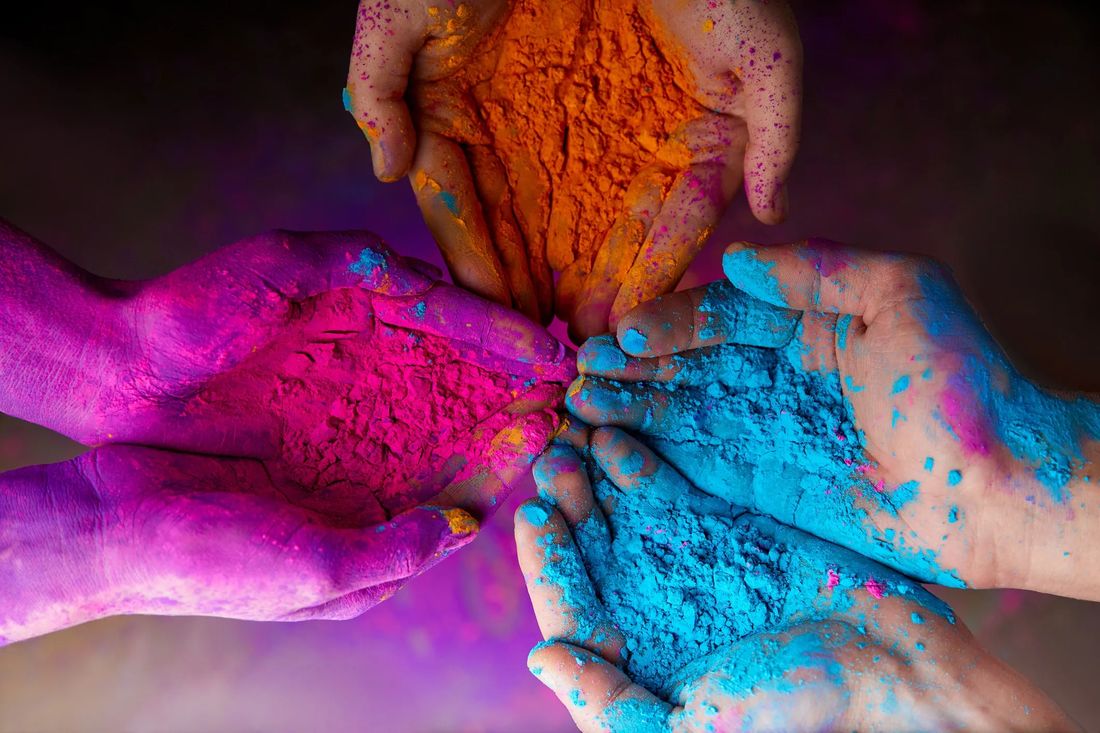
Holi, celebrated for days in Mathura and Vrindavan
Food: Varanasi mornings start with kachori-sabzi and hot jalebi, and the city is famous for its paan and malaiyyo, a winter milk froth flavoured with saffron. Lucknow is known for its fine Awadhi cooking, and Agra for petha. Every home cooks dal, rice, roti and seasonal sabzi, with kheer for festivals.
At home abroad: light a row of diyas at Dev Diwali, the full moon after Diwali, and tell children the story of the Ganga coming down from the sky through Shiva's hair.
Looking for something, or want to help? Ask us for a festival, ceremony or recipe from your region, or tell us how you would like to help.